
Paddles, Caimans, and Water Measurements
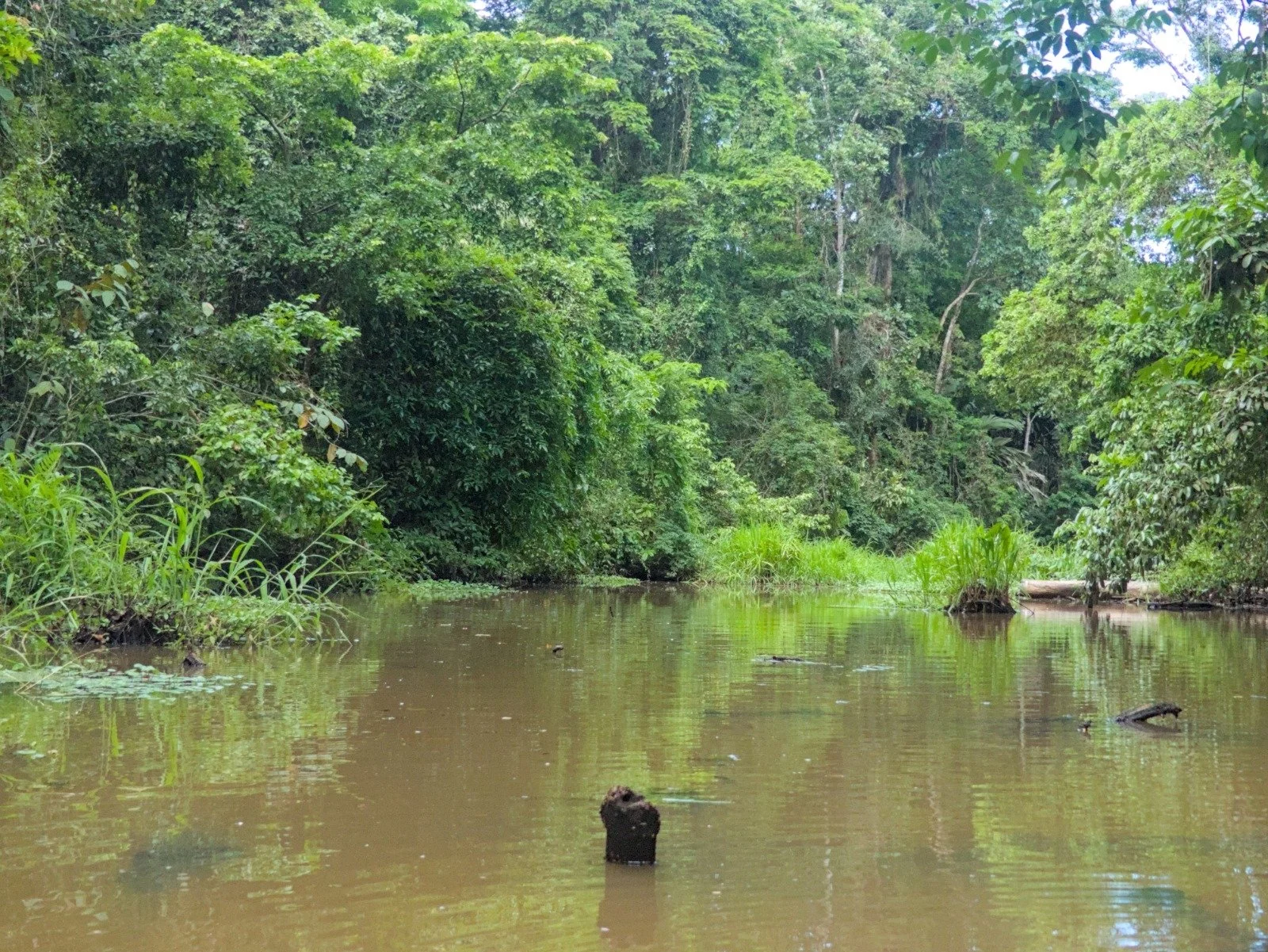
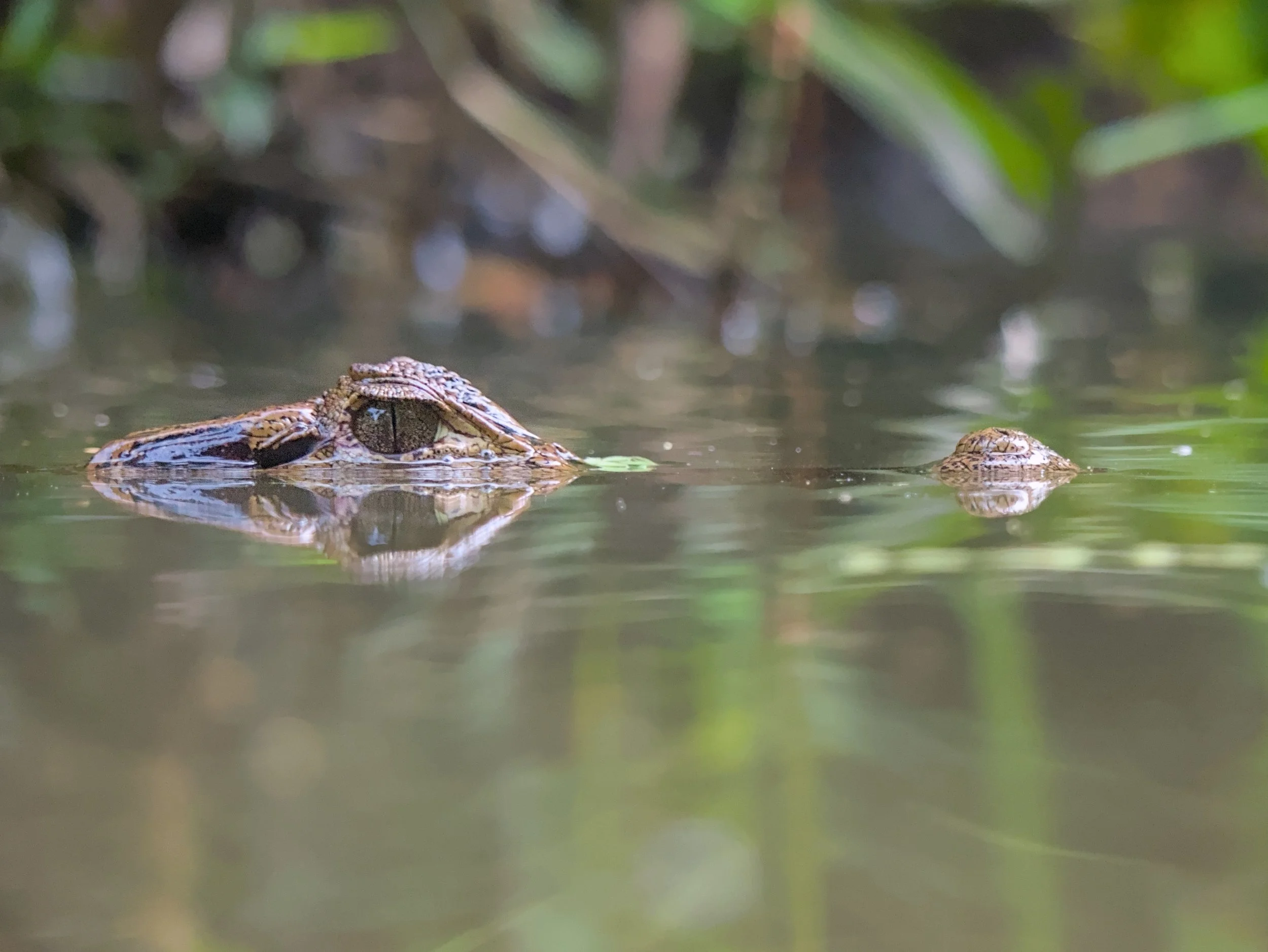
The sun was high overhead, and despite the shade provided by the overhanging rainforest canopy, the heat was impossible to ignore. My fellow intern and I were paddling a tandem kayak through a narrow channel in Tortuguero National Park, heading toward the second-to-last water sampling station of the day. We had already spent an hour measuring water quality. As we rounded a bend, I spotted something floating motionless near the edge of the river, beside our next sampling point: a sub-adult spectacled caiman. I had promised myself that I would take more photographs for my report, so this was a welcome surprise. A little farther back, another group of interns was conducting a separate caiman and otter survey. I hoped the animal would stay where it was long enough for them to spot it as well. After taking a few pictures, we paddled forward, completed our measurements, and looked back one more time. The caiman was still there, motionless and watchful, before we continued on to our final sampling point.
That encounter captures much of what made fieldwork at Caño Palma so memorable: long hours of paddling, meticulous data collection, and the constant possibility of encountering wildlife when you least expected it.
My research focused on the relationship between water quality and different age groups of spectacled caimans (Caiman crocodilus). To collect the data, we worked in two very different locations: Tortuguero National Park ("Park") and Laguna Cuatro ("Laguna"). If I am honest, I usually looked forward to field days in Park more than those in Laguna. Park surveys were relatively straightforward. We visited ten sampling stations, often under the shade of the forest canopy, and the chances of seeing caimans were high. Laguna was a different story. Before reaching the first sampling point, we first had to paddle nearly five kilometers up the Caño Palma River. Only then could we begin working our way through the lagoon, visiting all twenty-three measurement stations before making the entire journey back again. The days were long, and under the tropical sun they could be exhausting. Fortunately, the wildlife often made the effort worthwhile. During surveys in Laguna, we encountered everything from herons and kingfishers to a river otter.
While the wildlife encounters were exciting, the primary goal of my internship was to understand how water quality relates to the presence of spectacled caimans of different ages. Spectacled caimans are among the top predators in many freshwater ecosystems across Central and South America, and because they occupy such a high position in the food web, changes in their distribution may reflect broader environmental changes occurring throughout the ecosystem.
To investigate this, we regularly measured water conditions at sampling sites throughout both study areas. We recorded factors such as water depth, turbidity, temperature, acidity (pH), and conductivity, which is a measure related to the amount of dissolved minerals in the water. During separate surveys, we counted caimans and grouped them into three age classes: juveniles, sub-adults, and adults.
The results suggested that younger caimans use different parts of the habitat than older individuals. Juveniles were generally found in water with a slightly higher pH and were associated with a wider range of conductivity levels. At the same time, they tended to occur within a narrower range of water temperatures than adults and sub-adults. Why might this be the case? Young caimans face different challenges than adults. They are more vulnerable to predators and may depend on specific areas that provide shelter, food, or suitable conditions for growth. These factors could influence where they choose to live within the wetland.
The study also revealed clear differences between the two research areas. Compared to Park, Laguna had warmer water, higher conductivity, and murkier conditions. Whether these environmental differences help explain the lower number of caimans in Laguna remains an open question, but it is an interesting avenue for future research.
For me, this project highlighted how closely wildlife is connected to its environment. Water quality is often invisible to the casual observer, but even small changes can influence where animals live and thrive. By monitoring these environmental conditions, we can gain valuable insights into the health of freshwater ecosystems and the species that depend on them. I arrived at Caño Palma expecting to learn about water quality and caimans. I left with sunburned arms, thousands of paddle strokes behind me, a camera full of wildlife photographs, and a much deeper appreciation for the complexity of tropical freshwater ecosystems.
Joris Groothoff