
Nine Months in the Swamp: What Caimans, Jaguars and Cold Showers Taught Me
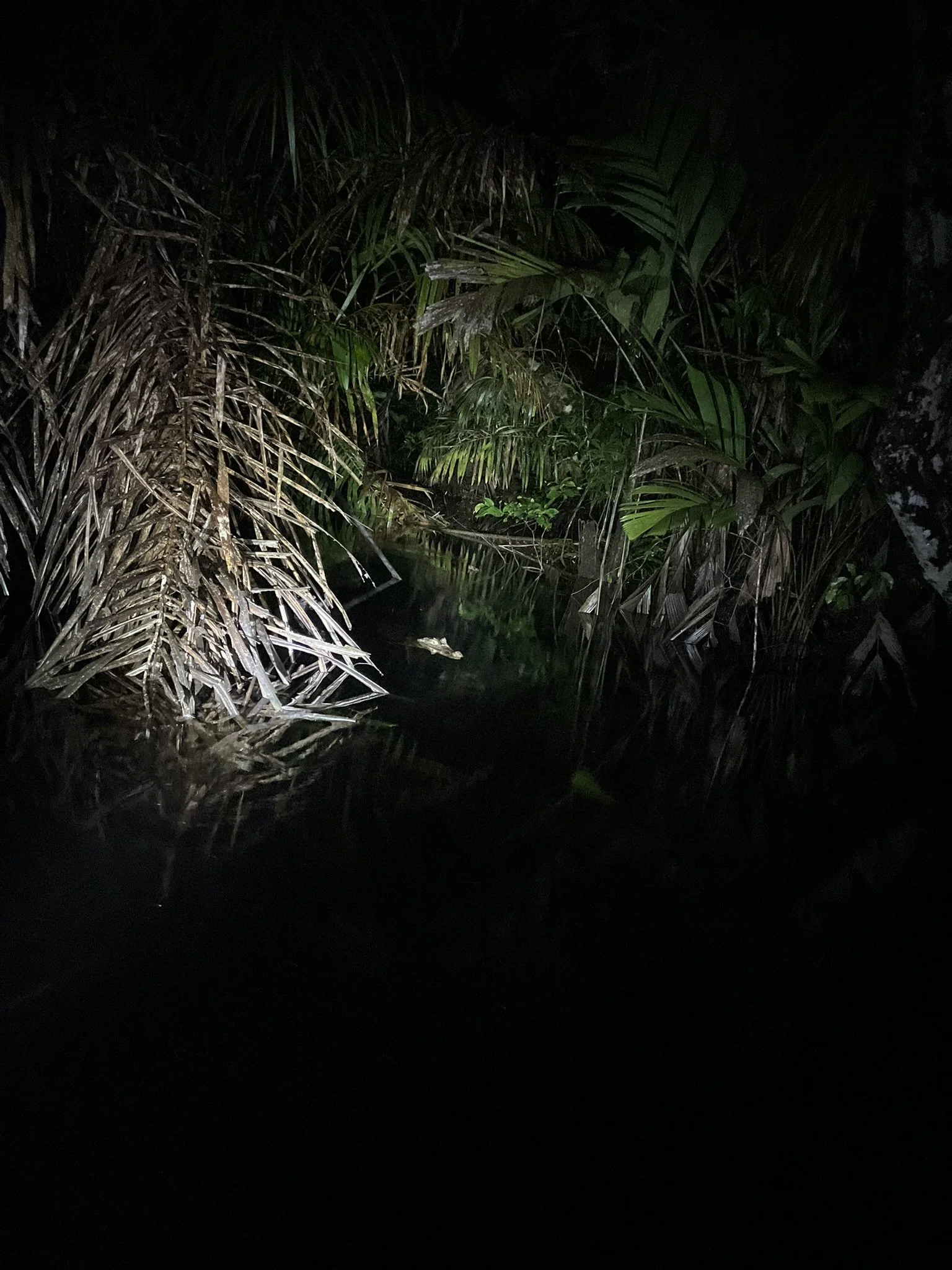
For my professional placement from Cardiff University, I spent nine months at Caño Palma Biological Station in Tortuguero, Costa Rica, working on a research project comparing nocturnal and diurnal surveys of spectacled caimans. In simple terms, I was trying to find out whether daytime and nighttime surveys produce equivalent results, which matters if we want reliable population monitoring methods for these very cool, very toothy reptiles.
Life at Caño Palma was not exactly luxury. The setting was minimalist, which is a polite way of saying that hot water quickly became a distant memory and dry clothes became a myth. But I loved it. Being there made me realise how little you need when you are surrounded by rainforest, wildlife and people who care deeply about conservation. After a while, you stop worrying about the shower temperature and start worrying about whether another tourist will take a picture of you while out on surveys.
The fieldwork itself was full of unforgettable moments. I was lucky enough to see two jaguars: one in the Laguna and one during a nocturnal caiman survey, which is the kind of experience that makes every mosquito bite suddenly feel worth it. I also watched monkeys jumping across the canal from both sides, turning the trees above us into what felt like a chaotic rainforest motorway.
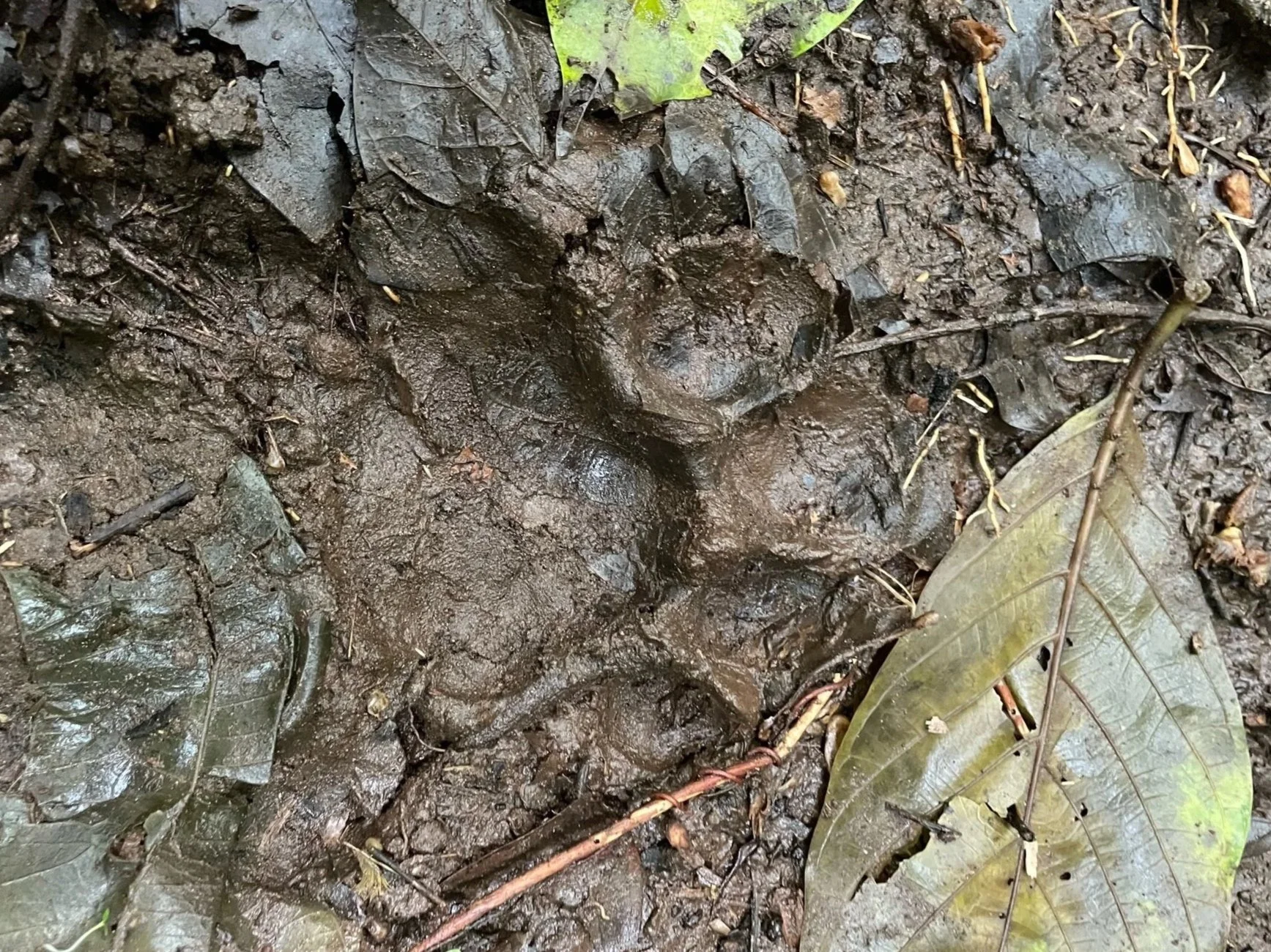
Of course, there were challenges too. The biggest disappointment was not seeing a third jaguar. I realise this is not exactly a tragic hardship, but fieldwork has a way of recalibrating your expectations: after two jaguar sightings, the impossible suddenly starts to feel quite reasonable.
One of my favourite sightings, however, was much less majestic: an otter enthusiastically rubbing its back on a log for about a minute. After months of serious data collection, watching an otter use a fallen tree like a rainforest scratching post felt like exactly the kind of scientific observation I was meant to be making.
This placement taught me how much I love practical conservation work. I loved feeling useful, being outside, and contributing, even in a small way, to understanding and protecting the wildlife around me. It also made me reflect on how much nature has been lost or neglected back home in the UK, and how strongly I want to be part of restoring and protecting it in the future.
I learned too much about myself to put neatly into words, but I came away more certain of one thing: I want my future to involve mud, wildlife, conservation, and ideally at least one more jaguar.
Adam Bailey